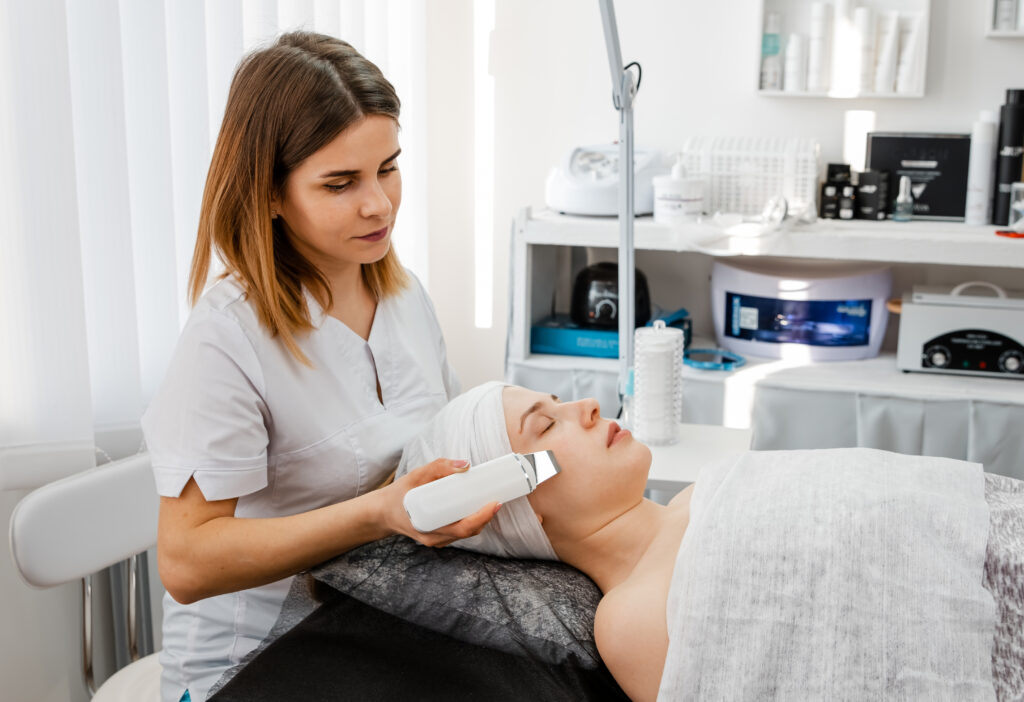
If you’re dealing with recurring breakouts, clogged pores, oily skin or the lingering marks left by acne, you may have wondered: is hydrofacial good for acne? At Pinnacle Clinic Keighley, we often get this question, and it’s a good one.
In this blog we’ll explore how a HydraFacial works, what the evidence shows for acne, realistic expectations, how the treatment should be tailored for acne-prone skin, and what you can do alongside it for best results.
How Can Hydrofacial Help Acne-Prone Skin?
When your skin is acne-prone, key issues typically include excess oil (sebum), clogged pores, bacteria, inflammation and sometimes residual pigmentation or scarring. A HydraFacial may help in several ways:
✔ Deep Cleansing & Exfoliation
The device helps to remove dead skin cells and debris that block pores — a major contributing factor in acne.
✔ Pore Extraction
The vortex-extraction element helps clear blackheads, whiteheads and congested skin gently, which may reduce breakout triggers.
✔ Hydration & Barrier Support
By infusing serums rich in hyaluronic acid, antioxidants and calming agents, a HydraFacial helps restore the skin barrier — and when the barrier is healthy, oil production and inflammation can be better controlled.
✔ Oil & Congestion Reduction
Some clinics report that HydraFacial treatments reduce oiliness and improve pore size, which in turn may reduce the frequency of acne flare-ups.

What Does the Research Say?
The evidence for HydraFacial in treating acne is growing but still relatively limited — meaning it’s promising but not a guaranteed fix.
For instance, a 2022 study found that a series of six HydraFacial Clarifying treatments improved overall skin appearance and active acne in participants.
Yet another summary source states, “Currently, there are no large-scale clinical studies highlighting benefits of HydraFacial specifically for acne.”
So the takeaway: yes, there is evidence that HydraFacial can be used for acne-prone skin, but it should be part of a broader skincare and medical plan rather than a sole solution.
Is HydraFacial Good for Acne? The Realistic Answer
So, is hydrofacial good for acne? In short: yes, but with important caveats.
It can be very helpful for mild to moderate acne, especially when the issues are clogged pores, oiliness and minor inflammation. It’s less likely to replace medical treatments for severe or cystic acne.
Here’s what to expect and what not to expect:
✅ What You Can Expect
- Cleaner, less congested pores
- Reduced oiliness and shininess
- Softer texture, more radiant skin
- Possibly fewer breakouts over time
- Improved response to skincare products
❌ What You Cannot Guarantee
- Complete elimination of acne bacteria or hormonal acne
- No downtime required (you’ll still need proper aftercare)
- Permanent “cure” of acne — maintenance and medical oversight remain important
At Pinnacle Clinic, we emphasise that a HydraFacial is a tool in the acne-control toolbox, not a standalone “magic wand”.
Who is a Good Candidate at Pinnacle Clinic Keighley?
You might be a good candidate for HydraFacial if you:
- Have oily or combination skin with visible congestion
- Regularly suffer from blackheads or whiteheads
- Have mild acne and want to reduce flare-ups
- Want a non-invasive treatment with minimal downtime
- Are committed to following aftercare and maintenance
You may not be the ideal candidate if you:
- Have very severe or cystic acne needing prescribed medication
- Are using strong retinoids, have open wounds, or active infection
- Are pregnant (consultation needed)
- Or have untreated skin conditions that need medical first-aid

What to Expect During the Treatment
At Pinnacle Clinic, a typical HydraFacial for acne-prone skin would involve:
- Initial consultation & skin assessment
- Cleansing and gentle exfoliation
- A mild acid peel (often glycolic or salicylic) suited to acne-prone skin
- Vortex extraction of pores
- Infusion of hydrating/clarifying serums tailored for acne concerns
- Cooling or calming the skin and applying sun protection
After the procedure: mild redness perhaps, but minimal downtime. You should be able to return to most of your normal activities.
How Many Sessions Do You Need?
For acne-prone skin the spacing of treatments matters. Many clinics recommend:
- An initial course of 4-6 treatments every 2-4 weeks
- After that, maintenance treatments every 4-8 weeks depending on your skin response
Aftercare and Supporting Your Skin
To maximise your results and minimise breakout risk after a HydraFacial:
- Use a gentle cleanser and avoid harsh acids for 24-48 hours
- Fully apply SPF 30+ every day
- Avoid heavy makeup for the remainder of the day (if possible)
- Continue using your prescribed acne skincare or maintenance products
- Stay hydrated and follow your clinician’s guidance
These steps support the treatment’s benefits and help maintain clarity.
What Are the Risks or Limitations?
While safe in regulated clinics, you should know:
- It’s not a substitute for prescription acne medication when needed
- Some individuals may experience purging — i.e., temporary flare-ups as the skin clears out debris
- If you have active cystic acne, open wounds or severe inflammation, you may need medical treatment first
- Cost and the need for ongoing treatments mean budgeting is important
Why Choose Pinnacle Clinic Keighley?
When selecting a clinic for a HydraFacial for acne-prone skin, consider:
- Regulation: Our clinic is registered with the Care Quality Commission (CQC)
- Personalisation: We tailor the treatment to acne concerns, not just general “beauty”
- Qualified Staff: Treatments delivered by trained professionals who understand acne and skin health
- Clear Information: No exaggerations, just honest discussion on is hydrofacial good for acne and what to expect
- After-care Support: We guide you through follow-up and maintenance so results last

Conclusion
Is hydrofacial good for acne? Yes when done in the right context, with the right expectations and as part of a broader skin-health plan.
At Pinnacle Clinic Keighley, we view it as a valuable tool for acne-prone skin, especially for those dealing with clogged pores, oiliness and mild breakouts. With proper assessment, tailored treatment and realistic understanding, it can help your skin look and feel clearer, calmer and healthier.
FAQs About Hydrofacial for Acne
1. Can a Hydrofacial completely get rid of acne?
A Hydrofacial can help reduce congestion, oiliness and breakouts, but it isn’t a complete cure for acne. It works best for mild to moderate acne and is often combined with a daily skincare routine or medical treatment for stronger results.
2. Is Hydrofacial safe for sensitive or acne-prone skin?
Yes, the Hydrofacial is designed to be gentle and non-irritating. It’s usually suitable for sensitive or acne-prone skin, but your clinician will assess your skin first to make sure the treatment is appropriate for you.
3. How long do Hydrofacial results last for acne-prone skin?
Most patients notice clearer, smoother skin for one to two weeks after their treatment. With regular sessions every 4–6 weeks, the improvements tend to last longer and help keep congestion under control.
4. Can I have a Hydrofacial if I’m on acne medication?
It depends on the medication. Some prescription treatments such as strong retinoids may make the skin too sensitive. Your clinician will check your skincare and medication to advise safely.
5. Will I break out after a Hydrofacial?
Some people experience a mild “skin purge” after their first treatment as the pores clear out. This is usually temporary and settles as your skin adjusts. Most patients notice less congestion and fewer breakouts over time.